

Selling a business is a massive milestone. However, many business owners do not realise that how you structure the transaction matters as much as the final sale price.
Many business owners assume selling a business is a straightforward process until they discover that the structure of the transaction can significantly affect tax obligations, liabilities, and contractual requirements.
Choosing the right business sale structure can change everything, from your tax obligations to your future legal liabilities. To help you navigate this transition, let’s break down the key legal differences every business owner should understand.
What Are the Key Differences Between an Asset Sale and a Share Sale?
At its core, the difference between asset sale and share sale structures comes down to what the buyer is actually taking home at the end of the day.
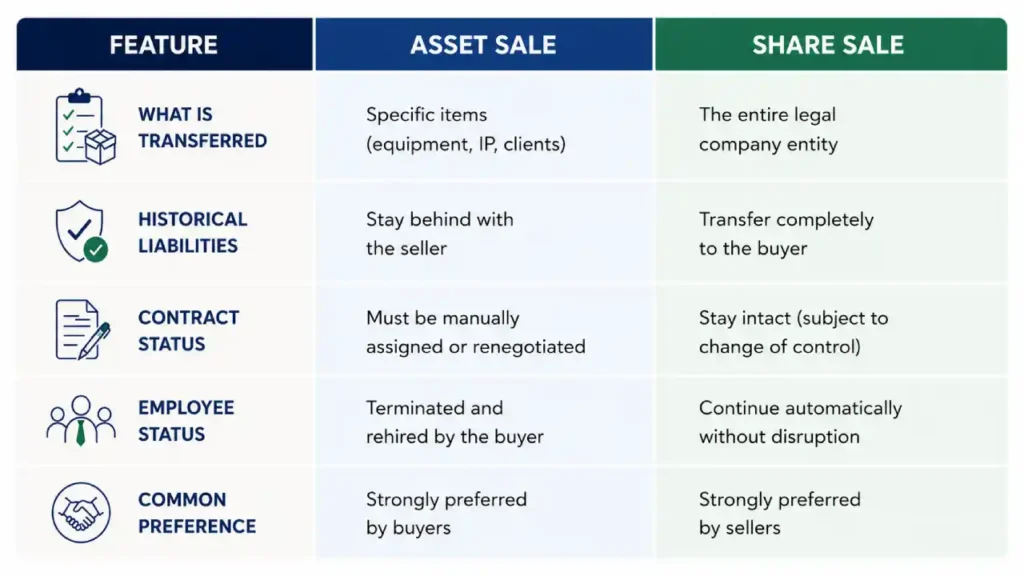
In an asset sale, the buyer picks and chooses specific things that belong to the company. They might want the specialised machinery, the customer database, the inventory, or the brand name. Crucially, the company itself stays with the original owner. It is a bit like selling the furniture inside a house while keeping the actual building.
A share sale transaction is entirely different. Instead of buying individual pieces, the buyer purchases shares of the company itself. Because the company already owns all the assets, everything transfers to the buyer automatically when the share certificates change hands. Using the same house analogy, this is like handing over the keys and the deed to the entire property. The buyer gets the furniture, the foundation, and any hidden leaks that come with it.
Key Legal Considerations in Asset Sale vs Share Sale
Choosing between these paths requires careful preparation. There are distinct legal and operational steps involved for both options, and each handles risk differently.
When you proceed with an asset sale, the seller and buyer will sign an Asset Purchase Agreement. Because you are transferring individual items rather than a single entity, you must transfer each asset manually. This means you have to re-negotiate or assign third-party contracts, commercial leases, and supplier agreements. If a landlord refuses to transfer your current lease to the new buyer, the entire deal can stall.
On the surface, a share sale looks much cleaner. Because the corporate entity remains completely intact, contracts with suppliers and landlords usually do not need to be rewritten. However, you still need to be careful. Many commercial agreements include a “change of control” provision that may be triggered when ownership of a business changes.
Planning a Business Sale in Victoria? Get trusted legal advice on asset sales, share sales, and business sale agreements.
Speak with a Business Sale Lawyer
Liability and Risk: Asset Sale vs Share Sale for Business Owners in Victoria
For business owners in Victoria, historical liability is often the ultimate deciding factor. It is important to determine who will be responsible for any legal liabilities or claims arising from events that occurred before the transaction was completed.
Buyers generally prefer asset sales because they allow them to leave behind old risks. If the original company faces a lawsuit for a past mistake or an unpaid tax debt, that liability stays with the old company and the seller. The buyer walks away clean with their new entity.
Sellers, on the other hand, usually prefer share sales because they offer a total exit. The buyer takes ownership of the company together with its existing rights, obligations, and liabilities. Because the buyer assumes all this risk, they will conduct intense due diligence before buying. They will carefully review financial records, contracts, and any previous legal disputes to assess potential risks. They will also require extensive warranties in the contract to protect themselves from hidden surprises. Navigating these legal considerations with experienced business sale lawyers is vital to protect your wealth..
To visualise how these two structures stack up side by side, look at the core trade-offs:
Employees and Operational Continuity
How your team transitions also depends heavily on your transaction path.
In an asset sale, employees do not automatically move to the new owner. The seller must formally terminate their employment and pay out outstanding entitlements like accrued annual leave. The buyer can then choose to offer them brand new employment contracts.
In a share sale, the transition is seamless. Employee contracts simply continue because their employer, the company, has not actually changed. Their length of service and leave entitlements remain intact, which often makes it a much smoother experience for your staff.
Whether you are buying or selling, choosing the right business sale structure requires tailored legal advice. Experienced lawyers for buying or selling a business can help you assess your options, manage risks, and protect your interests throughout the transaction.
Frequently Asked Questions:
What is the main difference between asset sale and share sale structures?
The main difference is what is being transferred. In an asset sale, the buyer only purchases specific components of the business, like equipment or client databases, using an Asset Purchase Agreement. In a share sale, the buyer purchases the company’s shares, taking over the entire legal entity along with all its assets and history.
Why do buyers usually prefer an asset sale over a share sale?
Buyers prefer asset sales because they minimise their legal exposure. It allows them to select the profitable parts of a business while leaving behind historical debts, legal liabilities, and potential tax issues with the seller.
Do employees automatically transfer in a share sale transaction?
Yes, employees generally remain with the business because the company continues to be the legal employer. In an asset sale, employees do not transfer automatically; the seller must terminate them, and the buyer must offer them new employment contracts.
What are the key tax legal considerations in asset sale vs share sale choices?
A share sale may allow an eligible seller to access Capital Gains Tax (CGT) small business concessions, which can significantly lower their tax bill. An asset sale triggers tax events within the company itself, and buyers may face different stamp duty costs depending on the specific assets they purchase.
Why should I hire a business sale lawyer in Victoria to handle my transaction?
Every state has specific rules regarding stamp duty, commercial property leases, and employment laws. A local specialist will help you draft protective warranties, check your contracts for change of control clauses, and ensure your business sale complies with all Victorian regulations.