
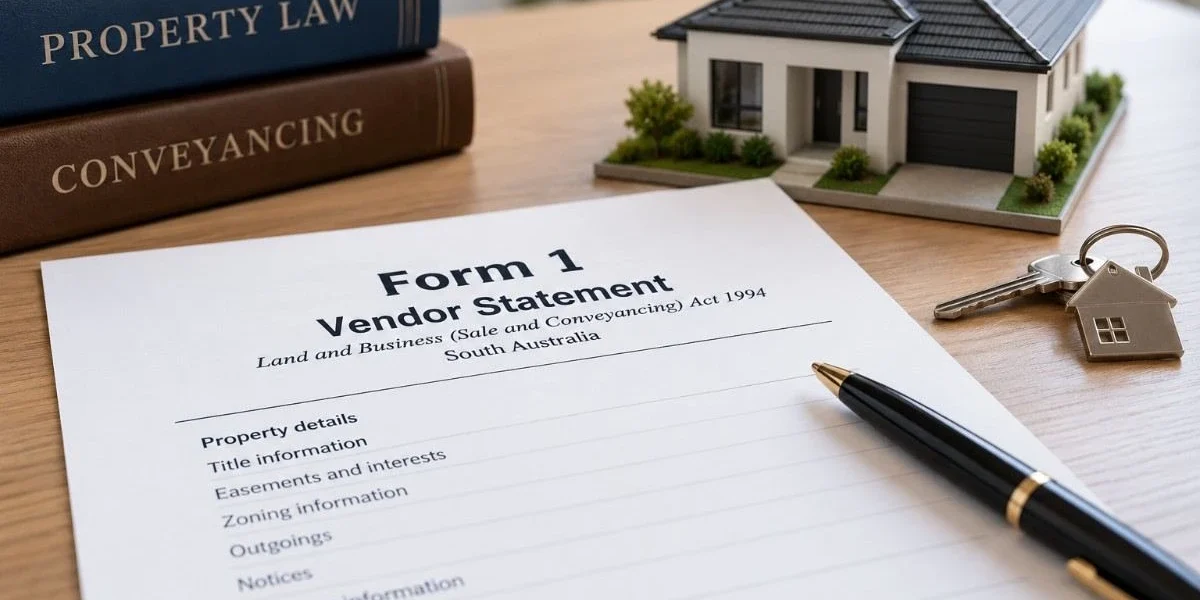
Buying a home or investment property involves more than checking the price, location and condition of the building. The legal information attached to the property also needs careful attention.
The Form 1 Vendor Statement in South Australia is an important disclosure document in the purchase process. It provides prescribed information about the property and explains the purchaser’s cooling-off rights. Reviewing it early can help buyers identify matters that may need further investigation before proceeding with the purchase.
What Is a Form 1 Vendor Statement in South Australia?
A Form 1 is a disclosure statement provided in connection with the sale of land in South Australia. It gives purchasers prescribed information about the property.
Depending on the property, this may include title details, registered mortgages, easements, zoning, outgoings and other relevant matters.
The Form 1 disclosure requirements matter because some information may not be obvious during a property inspection. Buyers should therefore consider what the disclosures mean for their particular purchase rather than simply checking that the document has been provided.
Property Disclosure Checks Buyers Should Make
When reviewing a Form 1, buyers should consider whether any disclosed information could affect how they plan to own, occupy or use the property.
Important property disclosure checks may include:
- property and title details
- registered easements
- mortgages and other disclosed interests
- zoning information
- relevant notices
- applicable outgoings
- tenancy information, where relevant
A disclosed matter does not necessarily mean there is a problem. However, it may indicate that further enquiries are appropriate.
Example: An Easement Affecting Renovation Plans
Imagine you are purchasing a home in Adelaide and plan to extend the property into the backyard.
During the vendor statement review, you notice an easement affecting part of the land. The easement may not prevent you from buying the property, but it could affect where or how you can build.
Identifying this before proceeding allows you to investigate whether your renovation plans could be affected.
When Should Buyers Review the Form 1?
Buyers should review the Form 1 as early as possible and, where possible, before signing the contract.
For private sales, the Form 1 must generally be served at least 10 clear days before settlement. Its timing can also be relevant to cooling-off rights. Different rules and exceptions can apply to auctions and certain other transactions.
For anyone buying property in South Australia, reviewing the document early provides more time to raise questions and investigate anything that is unclear.
Need Help Before Signing? Have your Form 1 and property contract reviewed before moving forward with your purchase.
What a Form 1 May Not Tell You
The Form 1 contains prescribed disclosures, but it should not be treated as a complete assessment of the property.
Separate investigations may still be appropriate for matters such as the physical condition of the building, boundaries or particular compliance concerns.
Example: The Form 1 Does Not Replace a Building Inspection
A buyer reviews the Form 1 and finds no significant concerns. The property also appears to be in good condition during an inspection.
After settlement, structural problems are discovered.
The Form 1 was not designed to assess the physical condition of the building. This is why legal disclosures and appropriate property inspections should be considered separately.
For residential purchases, our residential property conveyancing lawyers can assist with the legal aspects of the transaction.
Why a Vendor Statement Review Matters
Some information disclosed in a Form 1 can have practical consequences.
An easement may affect building plans. Zoning information may be relevant to the buyer’s intended use of the property. A tenancy could affect when the buyer can occupy the home.
Reviewing these matters before proceeding allows buyers to ask questions and determine whether further searches or advice are needed.
Our conveyancing lawyers in South Australia can assist with reviewing relevant property documents and explaining the conveyancing requirements that apply to the transaction.
Legal Checks Before Signing a Property Contract in South Australia
The Form 1 is only one part of the purchase process. The contract itself also needs careful consideration.
The legal checks before signing a property contract in South Australia may include reviewing contract terms, checking title information and considering whether appropriate conditions are required for matters such as finance or inspections.
Example: Finance Was Discussed but Not Properly Addressed
Suppose a buyer tells the selling agent that the purchase depends on obtaining finance. The buyer assumes this conversation provides sufficient protection.
However, what matters is how the finance condition is addressed in the written contract. Important conditions should be checked before signing rather than relying on informal discussions.
Form 1 Vendor Statement South Australia and Cooling-Off Rights
The timing of a Form 1 can be particularly important because it is connected with cooling-off rights.
In many private sales, purchasers have two clear business days to cool off. The period generally begins after the contract is signed or the Form 1 is served, whichever occurs later. Different rules can apply in some circumstances, including auction purchases.
Buyers should therefore avoid leaving questions about the Form 1 until the cooling-off period is close to ending.
What Happens After Reviewing the Form 1?
If the Form 1 does not raise concerns, the purchase can continue through the usual conveyancing stages, subject to the contract and the buyer’s circumstances.
If an issue is identified, further enquiries, searches or advice may be appropriate before proceeding.
The wider conveyancing process can include contract review, title checks, settlement preparation and completion of the property transfer.
The purpose of reviewing the documents early is to understand relevant issues while there is still time to address them.
Conclusion
The Form 1 Vendor Statement South Australia can reveal important information about a property that may not be obvious during an inspection. Reviewing it alongside the contract, title information and appropriate property checks can help buyers better understand what they are purchasing.
VK Lawyers assists buyers with property transactions across South Australia. Our conveyancing team can help review Form 1 disclosures, explain relevant contract terms and guide buyers through the conveyancing process through to settlement.
Buying Property in South Australia? Get assistance from VK Lawyers with your Form 1, contract and conveyancing requirements.
Frequently Asked Questions:
What should I check in a Form 1 before buying property in South Australia?
When considering what to check in a Form 1 before buying property in South Australia, review title details, easements, mortgages, zoning, relevant notices and outgoings. Any matter that could affect your intended use of the property may require further investigation.
What information is included in a Form 1 Vendor Statement?
If you are wondering what information is included in a Form 1 Vendor Statement, it can contain prescribed information about the title, mortgages, easements, zoning, outgoings and cooling-off rights.
When should buyers review a Form 1 in South Australia?
For buyers asking when they should review a Form 1 in South Australia, earlier is generally better. Reviewing it before signing, where possible, provides more time to understand the disclosures and investigate potential concerns.
Does a Form 1 replace a building inspection?
No. A Form 1 provides prescribed legal and property information. It does not assess the physical condition of the building. Separate building, pest or other inspections may still be appropriate.
What legal checks should I make before signing a property contract?
The legal checks before signing a property contract in South Australia may include reviewing the Form 1, contract terms and title information, as well as checking whether important conditions such as finance or inspections are properly addressed.