
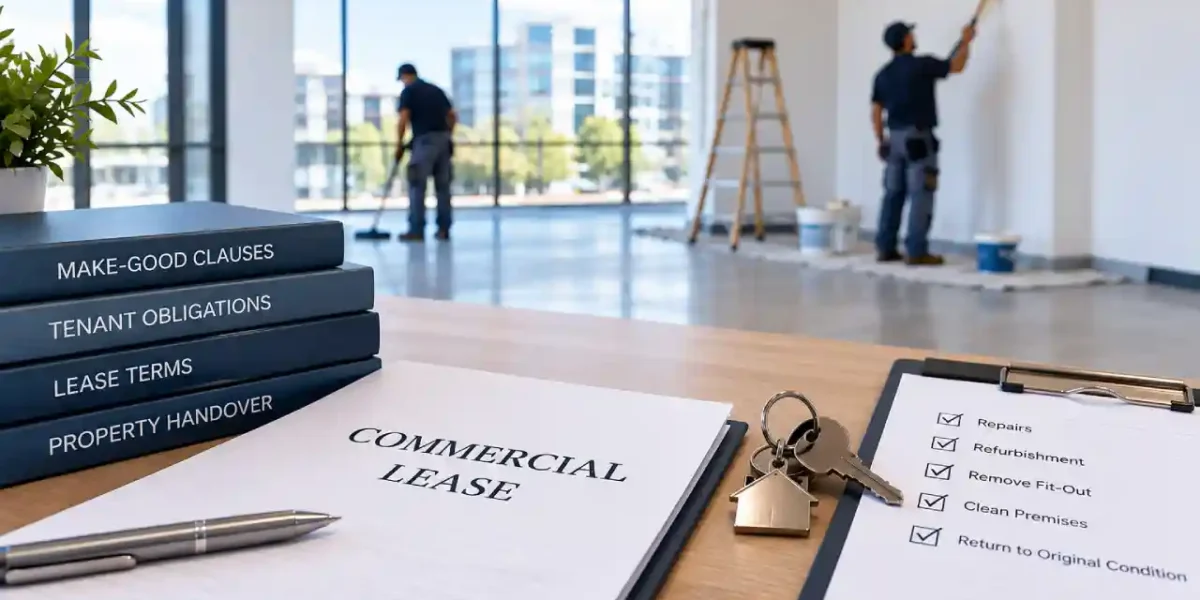
Reaching the end of a commercial tenancy often brings unexpected financial surprises. One major source of tension between property owners and business occupants involves restoring the premises. Understanding tenant responsibilities at the end of a lease can help prevent costly disagreements on handover day.
Whether you operate a retail shop, an industrial warehouse, or a corporate office, understanding these reinstatement terms is vital. Partnering with skilled Commercial Lease Lawyers early in your tenancy can help you understand your obligations, manage legal risks, and prepare for a smoother exit from the property.
What Are Make-Good Obligations in Victorian Commercial Leases?
A make-good clause requires a tenant to return the rental property to a specific condition when their tenancy finishes. These contractual terms can range from basic cleaning to more extensive removal of fit-outs and restoration work. Understanding make-good obligations in commercial leases in Victoria can help tenants identify potential costs before handing back the premises.
Standard restoration levels may include:
- Base Return: Cleaning the premises thoroughly, repairing minor interior surface damage, and repainting walls where required under the lease.
- Partial Reinstatement: Removing tenant fixtures, built-in display shelving, office partitions, wiring, and specialised business equipment where required.
- Full Reinstatement: Restoring the premises to the condition specified in the lease, which may involve removing significant alterations or fit-outs.
Reviewing the lease before signing can help clarify the level of restoration expected at handover and reduce the risk of unexpected costs later.
Managing End-of-Lease Requirements and Reinstatement Costs
Restoring commercial premises requires careful timing, trade coordination, and financial planning. Unexpectedly high lease reinstatement costs can catch tenants off guard, particularly where specialised contractors are required to remove complex office fit-outs, lighting systems, or custom floor coverings.
To avoid budget blowouts, business owners should document the condition of the property before moving in. Key end-of-lease requirements to manage early include:
- Detailed Condition Reports: Create comprehensive photo logs, video walkthroughs, and written condition reports before installing any customised fit-out.
- Fair Wear and Tear: Consider the difference between deterioration that occurs through normal use over time and damage that may need to be repaired under the lease.
- Early Trade Quotes: Obtain realistic estimates from appropriate tradespeople before the handover date to help plan for potential restoration costs.
Understanding commercial lease reinstatement requirements VIC can help tenants plan and set aside funds during the lease term rather than facing unexpected costs when leaving the premises.
Landlord Rights Under a Make-Good Clause and Avoiding Disputes
Property owners use make-good provisions to help manage the condition of their premises at the end of a tenancy. Understanding landlord rights under a make-good clause can help both parties clarify what is expected before the property is handed back.
Depending on the terms of the lease and applicable Victorian law, a landlord may be able to:
- Conduct inspections before lease expiry to identify outstanding repair, cleaning, or reinstatement work.
- Seek recovery of reasonable costs or rely on available security, such as a deposit or bank guarantee, where permitted under the lease and applicable law.
- Notify the tenant of outstanding make-good obligations and request that agreed work be completed before handover.
The exact rights and obligations can vary depending on the type of lease and its terms. Qualifying retail leases in Victoria are also subject to the Retail Leases Act 2003 and related requirements.
Unclear wording regarding restoration standards can become a common source of commercial lease disputes. When clauses are vague, disagreements may arise over who is responsible for repainting, flooring, ceiling repairs, electrical work, or other reinstatement costs. Clear lease drafting and understanding your rights in commercial leasing agreements can help both parties understand their responsibilities and reduce the risk of disputes.
Resolving Commercial Lease Disputes Over Lease Reinstatement Costs
When property owners and business occupants disagree on final handover standards, addressing the issue early can help keep exit costs manageable for everyone involved. Unresolved commercial lease disputes may delay the next tenancy, affect the release of security, or lead to formal dispute resolution proceedings.
To resolve disagreements effectively:
- Compare initial condition reports and photographic records with the current condition of the premises to establish a clearer baseline.
- Negotiate an agreed financial settlement where appropriate instead of completing physical reinstatement work.
- Consider legal negotiation or mediation where the parties cannot reach an agreement directly.
For retail lease disputes in Victoria, the Victorian Small Business Commission provides assistance and mediation services under the Retail Leases Act framework.
Getting timely legal advice can help both parties better understand their position, negotiate disputed obligations, and potentially resolve the matter without lengthy formal proceedings.
Conclusion
Make-good clauses are important financial terms in many commercial leases. For tenants, understanding restoration obligations can help avoid unexpected costs when relocating or ending a tenancy. For landlords, clear lease terms can help protect the condition of the property and make the transition between tenants easier.
By setting clear expectations early, documenting the condition of the premises, and seeking professional advice where necessary, landlords and tenants can better manage their responsibilities at the end of a commercial lease. If you need help reviewing make-good obligations or resolving a lease issue, contact VK Lawyers for advice on your commercial leasing matter.
Frequently Asked Questions:
When should you seek legal advice about a commercial lease?
It can be helpful to seek legal advice before signing a commercial lease, making significant fit-out commitments, or agreeing to make-good obligations. Early advice can help clarify restoration requirements and potential end-of-lease costs.
What are make-good obligations in commercial leases in Victoria?
These are contractual requirements that may require commercial tenants to clean, repair, repaint, remove fit-outs, or restore certain parts of the premises before handing them back. The exact requirements depend on what has been agreed in the lease.
What are key tenant responsibilities at the end of a lease?
Primary tenant responsibilities at the end of a lease may include restoring the property to the condition required by the lease, repairing tenant-caused damage, removing business equipment or fit-outs, and completing other agreed handover requirements.
What landlord rights under a make-good clause exist in VIC?
Meeting title search requirements confirm that the vendor is the rightful owner and uncover registered encumbrances, such as mortgages, caveats, or easements, that could affect your ownership rights.
How do commercial lease reinstatement requirements VIC affect budgeting?
Meeting commercial lease reinstatement requirements VIC can involve significant expense, particularly where specialist trades are required to remove electrical installations, partitions, flooring, or other fit-outs. Reviewing these obligations early can help businesses plan for potential costs before lease expiry.
What counts as fair wear and tear at the end of a lease?
Fair wear and tear generally refers to deterioration that occurs through normal use over time. Whether a tenant must repair or replace a particular item will depend on the lease terms, the condition of the premises, and the circumstances.
What happens during commercial lease disputes over restoration costs?
When parties disagree over handover conditions or reinstatement costs, they may compare entry condition records, obtain quotes, and negotiate an agreed outcome. If the dispute cannot be resolved directly, legal negotiation, mediation, or other formal dispute resolution options may be considered.